Identity
To be Korean in Japan between 1910 and 1989 was to live a double life — split languages, double names, and the colonial policy of erasure that Pachinko’s characters navigate across generations.
Living a Double Life
To be Korean in Japan between 1910 and 1989 was to live a double life — not by choice, but by necessity.
At home, one language; in public, another. One name on the family register, another on the workplace form. The inner life conducted in Korean; the external world navigated in Japanese. Pachinko is a novel about what this doubling does to people across generations: what it costs, what it preserves, and what it destroys.
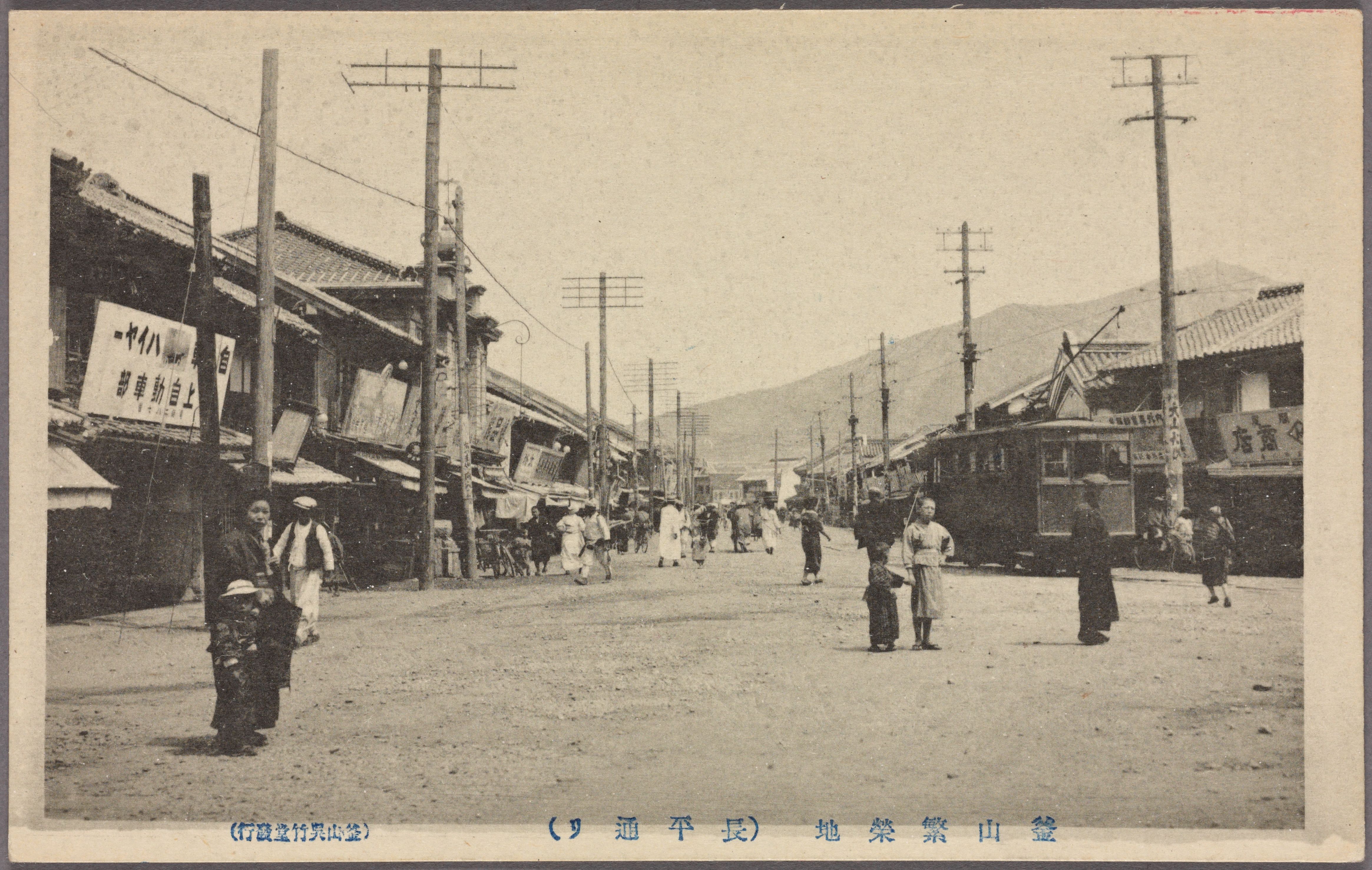
Japan's colonial administration did not simply govern Korea; it attempted, in stages, over thirty-five years, to replace Korean identity with Japanese identity. The early period restricted Korean-language instruction and controlled Korean publications. The March First Movement of 1919 — two million Koreans demonstrating for independence — was crushed with mass arrests and killings. The middle period brought modest relaxation without changing the terms of subordination. The final decade reversed even these concessions.
Then came the policy that runs through Pachinko like a fault line.
Language, Names, Religion
The colonial assault on Korean identity worked through three dimensions of daily life at once — language, names, and religion. Each operated through different mechanisms. Together they constituted what historians describe as a policy of ethnocide: the destruction of national identity not by killing people but by forcing them to become Japanese, on paper and in public.
Language. Japanese was the mandatory language of education from the start of colonial rule, and Korean-language instruction was progressively restricted through the 1920s and 1930s. In 1938 — the year Korean was banned from schools entirely — a three-part oath was introduced for Korean children to recite every morning.
We are subjects of imperial Japan.
We will work together to loyally serve the emperor.
We will train ourselves with discipline and become strong subjects.
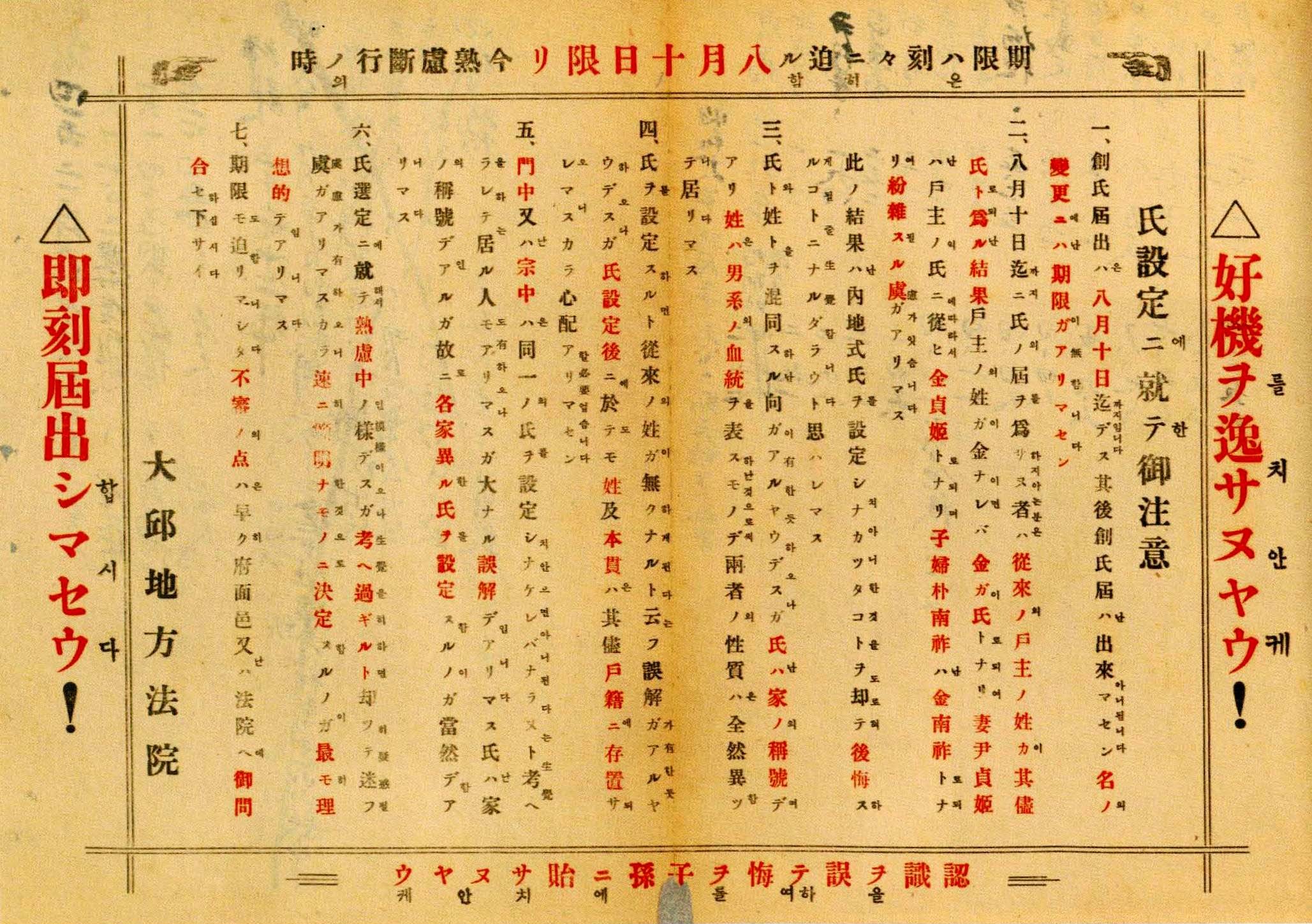
— Oath of the Imperial Subjects, 1938; required daily recitation in all Korean schools. Translation from Robinson, Korea's Twentieth-Century Odyssey, p. 94.Names. In 1940, the sōshi-kaimei policy required every Korean household to register a Japanese-style family name. It was officially described as voluntary. In practice, Koreans who refused lost access to employment, schools, hospitals, and government services. By mid-1940, roughly 80% of Korean households had registered Japanese names — most under coercion.
The 1940 colonial policy requiring Korean households to register Japanese-style names. It produced the central daily negotiation of the Zainichi experience: a Korean name became a liability — marking the bearer as Zainichi, triggering discrimination in hiring, housing, and lending — a document that had to be hidden, while the Japanese name became a performance that had to be sustained.
Religion. In 1938 the Kyōwakai — Japan's compulsory organization for Koreans in Japan — began enforcing mandatory attendance at Shinto shrines as acts of loyalty to the emperor. Christian pastors who refused the shrine rituals, or who kept ministering in Korean, were arrested. This is the charge that takes Isak: not sedition, not organizing, but the refusal to subordinate his faith and his community to colonial ritual.
Zainichi
The Zainichi community emerged from colonial economic disruption — the land dispossession and agricultural collapse that impoverished Korean farmers and drove roughly two million Koreans to Japan in search of work. By 1945 about two million Koreans were living in Japan. Most eventually repatriated, but some 600,000 remained, unable or unwilling to return to a divided, devastated peninsula.
"Who cares about 600,000 people."
— Min Jin Lee, describing the challenge of making the case for Pachinko's subject. Lee's line is the obstacle she set out to overcome, not resignation: the community was large enough to be one of Japan's most significant minorities, small enough to be invisible, and systematically excluded from telling its own story.Issei — first generation. Arrived in Japan as adults. Korea is home; Japan is where they work. Sunja and Isak carry their Korean identities intact — names, language, food, faith — because their lives are lived mostly within the Korean community of Ikaino. The tsūmei question barely touches them. What they carry from Korea is still real; the place they left still exists in memory.
Nisei — second generation. Born or raised in Japan. Korea is a language spoken at home, a set of foods and customs, a category on a legal document. Japan is the only country they know — yet Japan stripped them of Japanese nationality in 1952, leaving them stateless. Noa's response is total assimilation; Mozasu's is pragmatic acceptance. Neither resolves the structural condition.
Sansei — third generation. Solomon. Educated abroad, trilingual, professionally mobile — the generation that has done everything the system ostensibly rewards. The name question has not disappeared; it has taken a subtler form. When the land deal falls apart because of who Solomon is rather than what he has done, the distance between his education and his circumstances becomes the novel's final measurement of structural exclusion.
Two Names, Two Lives
The tsūmei — the Japanese passing name — is the daily mechanism through which Zainichi Koreans navigated a world that excluded them. Not a dramatic act of identity, but a persistent, low-grade performance: the name used at work, at school, at the bank, with the landlord. The name that kept the Korean name hidden.
The tsūmei is not a pseudonym and not a renunciation. It is a survival tool. Every Zainichi Korean character in Pachinko navigates the space between their Korean name and their tsūmei — a navigation that is daily, habitual, and exhausting. A choice of name signals power, intimacy, danger, and belonging all at once. For Noa the Japanese name becomes the self he is constructing; for Mozasu it is simply the name he uses at work; for Solomon it is both and neither.
Inside the Ikaino community, the Korean name was simply a marker of true identity. Outside it — in the landlord's office, at the school gate, in the factory hiring hall — the calculation began. The doubling was not confined to language or name. It extended to food, to custom, to the decision of whether to tell someone where you were from. Min Jin Lee has described interviewing Zainichi Koreans who spent their entire adult lives concealing their identity from Japanese colleagues, neighbors, and in some cases their own children.
What the novel renders, in a way no historical account can, is the texture of this concealment across a lifetime. Sunja selling kimchi from a cart among other Koreans is one kind of experience. Noa, reading English literature at a Japanese university while constructing an elaborate Japanese persona over years of methodical self-erasure, is another.
Solomon, managing the performance across three languages and two continents, is a third. The tsūmei is the same institution in all three cases; what it costs is different every time. Lee spent decades on this material, conducting hundreds of interviews across Japan — and nearly every Zainichi Korean she interviewed had some connection to the pachinko industry. The industry was not a choice; it was one of the few spaces the exclusion left open. That a disreputable trade entered through necessity became, through generations of labor, a community's economic foundation — the novel's central symbol of what survival under exclusion actually looks like.
Talking to the Dead
one ivory chrysanthemum on the cream — the offering brought when the rite says bring nothing
The colonial state could forbid the Korean language, overwrite Korean names, and force Korean bodies into Shinto shrines. What it could not reach was the quietest part of the inner life: the relationship between the living and their dead. To understand what the novel's characters held onto when so much was taken, it helps to understand the rite they were no longer supposed to perform and the echoes of that rite in the diaspora of the Zainichi.
Jesa is the Korean rite of remembrance for the dead. On death anniversaries and major holidays, a family prepares the deceased's favorite dishes, arranges them on a table or small shrine, and bows, speaking to parents, grandparents, and elders as if they were present. Its roots are Confucian — an extension of filial duty past the grave — and in practice it is less a worship of ancestors than an ongoing relationship with them, a way of continuing to feed and honor and consult the people one has lost.
Jesa · the rite in full
The table set for the dead
The dead are given a seat (신위), their favorite food (음식), incense (향), a cup of drink (술), and a bow (절) — the ancestor fed, honored, and addressed as if present. The whole rite is an act of keeping a relationship, not ending one.
For the novel's Protestant converts, jesa sits on a fault line. Most Korean Catholics and Buddhists kept the rite, but Protestants — the novel's tradition — generally did not, treating it as ancestor worship forbidden by the new faith. Isak's family does not observe it, and the Protestants he knew did not either. Yet the novel shows the longing outlasting the prohibition. Yangjin keeps a version of the rite for a husband who thought it unnecessary because it brings her comfort: making his favorite foods, tending the graves of her parents and her lost babies, speaking to the dead though she claims not to believe in ghosts. Sunja, standing at her father Hoonie's grave, finds it easy to feel his comforting presence; she reasons her way toward Isak's God from there. Koh Hansu's employee Kim has a quiet ambition to simply clean his parents' graves and do a proper jesa.
The rite becomes one of the novel's truest measures of what diaspora and conversion cost. The new faith forbids the form; it cannot dissolve the need.
Neither woman performed the jesa. As Christians, they weren't supposed to believe in ancestor worship. Nevertheless, both widows still wanted to talk to their husband and elders, appeal to them, seek their counsel. They missed their old rituals.
— Pachinko, Min Jin LeeNotice where the novel lets the word jesa fall: on the old dead and the old world — Sunja's unbelieving father at his grave, the parents Kim dreams of honoring in Daegu. When the rite reaches a Christian death it appears only as a negation — neither woman performed the jesa. The named ritual belongs to the old world: before conversion, before exile. What the widows keep is the longing the rite once held, with nowhere to put it but the cemetery.
Sunja's visits to Isak's grave become a careful negative image of the rite she cannot perform. Isak himself had taught her the doctrine that empties it of meaning — the body is in heaven, so there is no sense in bringing food or incense or flowers, no need to bow. The scene names each gesture of jesa only to mark it unnecessary. Yet she carries ivory chrysanthemums bought from an old Korean woman's stall and kneels to wipe a stone that needs no cleaning before she speaks to him. The rite's body is gone; its muscle memory remains.
It made no sense to bring a buried body favorite foods or incense or flowers. There was no need for bowing… And yet Sunja couldn't help wanting to bring something lovely to the grave.
— Pachinko, Min Jin LeeWhat remained · the rite reduced
What Sunja brought instead
The same rite, reduced to what one woman could still perform — no table, no incense, no bow, those gestures surviving only as the dashed shape of their absence. What stays solid is what was never really about the form: the chrysanthemums she carries, the stone she wipes though it needs no cleaning, the words she still says. For Noa, cremated, even the grave is gone — only 호박엿 (hobak-yeot) — the pumpkin taffy he loved as a boy — offered in memory.
The deepest echo of the ritual comes for a son with no grave at all. Noa was cremated; there is nowhere to go to visit him. So Sunja talks to him when she is alone, and she grieves that now that she finally has money she can no longer buy him the pumpkin taffy he loved as a boy. This is jesa reduced to its last atomic remnant: the favorite food of the dead, offered the only way left to her, in memory, because there is no table to set it on.