World
The history and geography Pachinko moves through — the Korean fishing village Sunja’s family leaves, the crossing to Japan, and the eighty years across four generations that follow.
The World of the Novel
Pachinko spans eighty years and four generations. It begins in 1910 — the year Japan annexed Korea — and ends in 1989, at the peak of Japan’s economic boom.
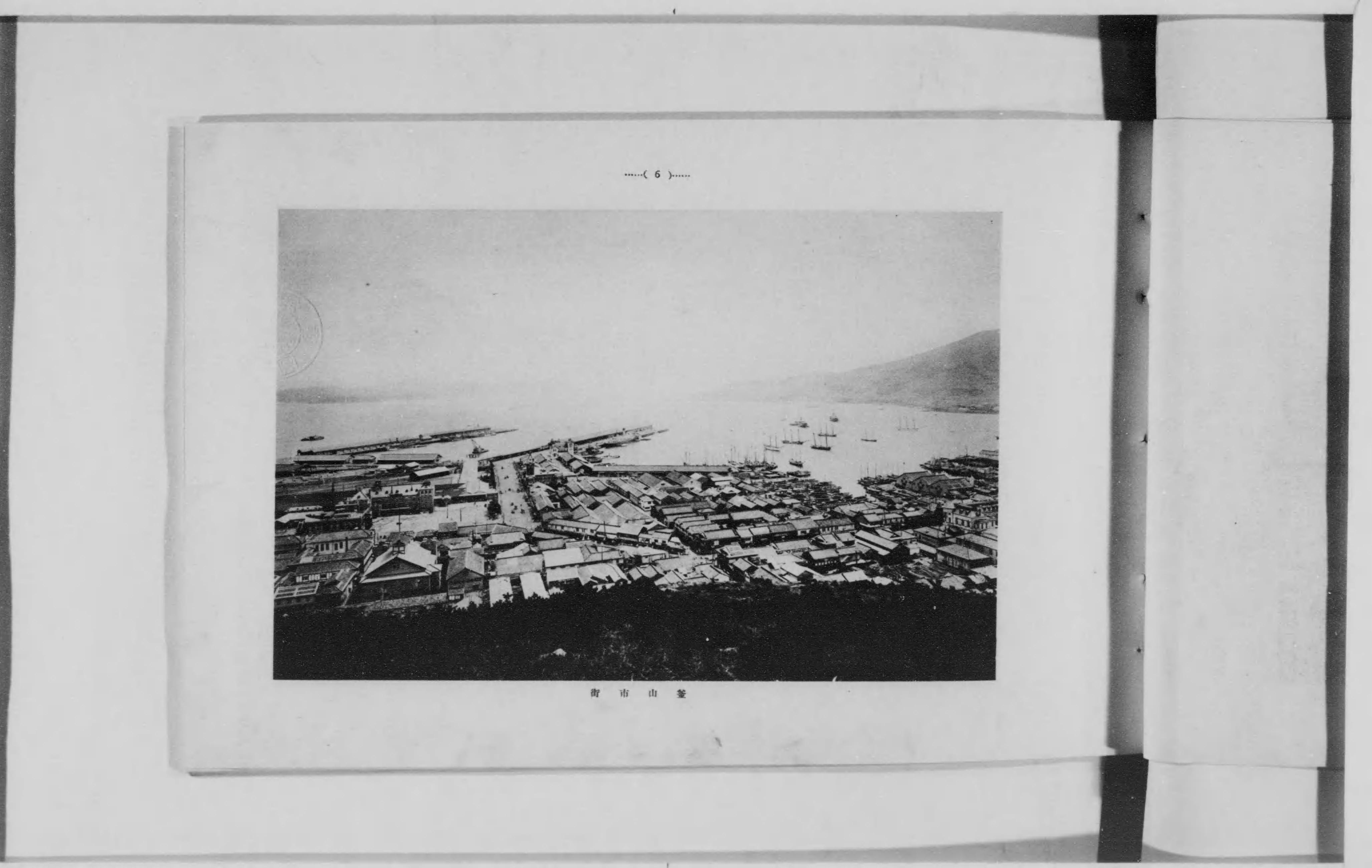
A family that starts in a Korean fishing village ends in a Tokyo skyscraper. The port city on Korea’s southeastern coast was the departure point for nearly every Korean who crossed to Japan.
This page traces the geography and history that Pachinko moves through: the world Sunja’s family left, the crossing that changed everything, and the Japan where four generations made their lives.
Yeongdo, Busan
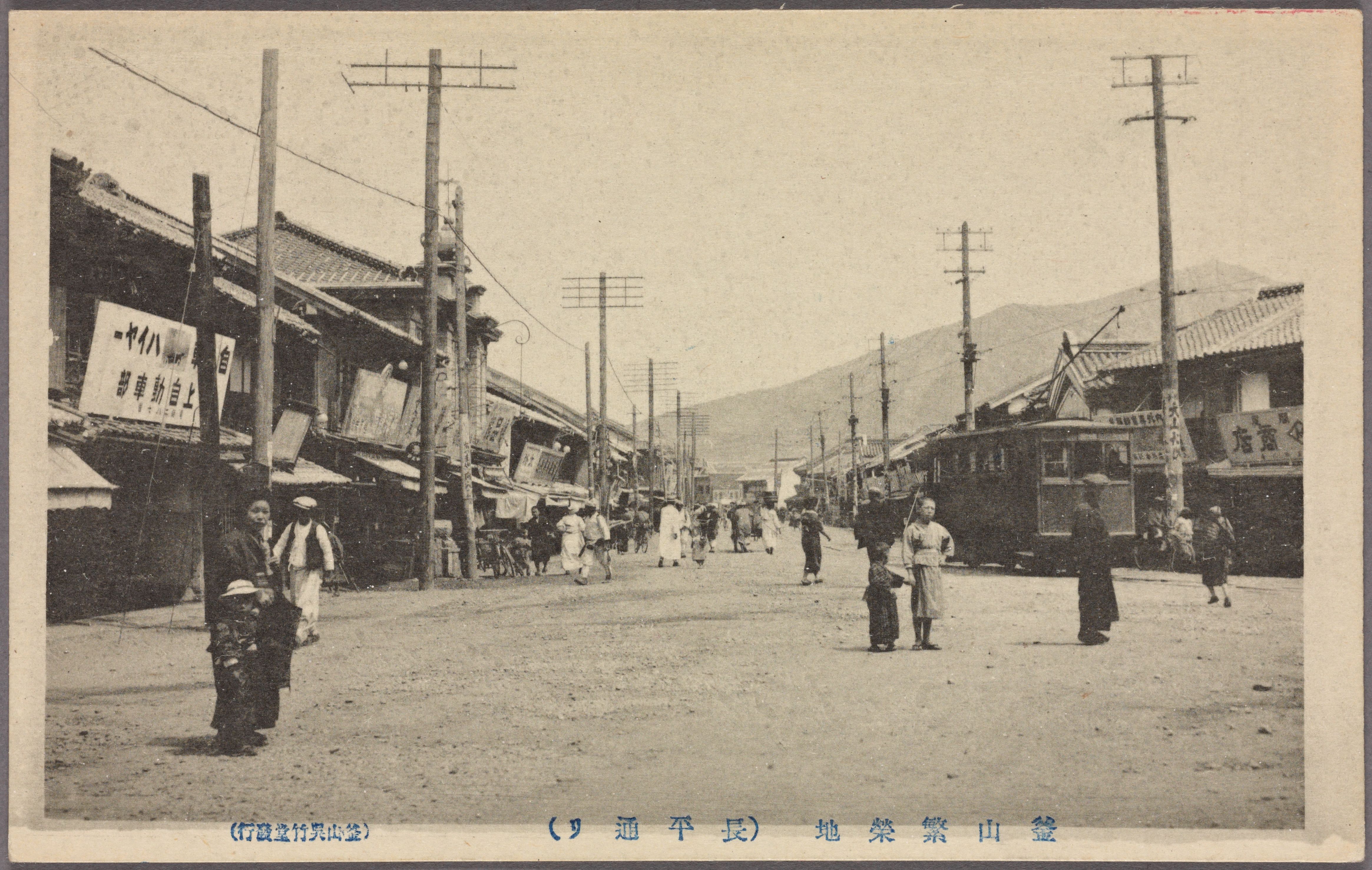
The novel opens in Yeongdo, a small island attached to the port city of Busan on Korea’s southeastern coast — the closest point on the peninsula to Japan. In 1910, Yeongdo was a fishing community: tight, poor, and largely self-sufficient. Sunja’s family runs a boarding house there, feeding and sheltering the men who pass through.
The Korea Sunja’s family inhabits is already a colonized country. Land had been surveyed and redistributed; languages were under pressure; the basic economic conditions of Korean rural life were being reorganized to serve Japanese interests. Sunja’s poverty is the product of a specific historical process — the novel traces its consequences rather than its mechanisms.
Busan to Shimonoseki
Busan mattered geographically because it was the city Koreans crossed from when they came to Japan.
The ferry route from Busan to Shimonoseki — roughly 200 kilometers across the Korea Strait — became one of the most heavily traveled corridors in twentieth-century Asia.
In 1905, the route opened as Japan gained protectorate control. The Korea Strait became a managed colonial corridor.
At its 1930 peak, 400,000 Koreans entered Japan in a single year — 80,000 to 150,000 crossing annually through the late 1920s and 1930s.
Travelers were required to prove they carried at least ten yen, demonstrate Japanese-language ability, and confirm employment.
Those who passed inspection arrived in Osaka and built a community in the Ikaino neighborhood — the largest concentration of Koreans in Japan. Despite the requirements, the crossings did not slow; scheduled ships could not keep up with demand.
1876 to 1989
Pachinko spans the entire arc of Japan’s colonial and postcolonial relationship with Korea — from the first forced opening of Korean ports to the year the novel ends, two years before Japan’s bubble economy collapsed.
Japan forces Korea to open its ports through an unequal treaty, beginning a half-century of expanding Japanese dominance.
Following victory in the Russo-Japanese War, Japan compels Korea to become a protectorate, stripping it of independent foreign policy.
Japan formally annexes Korea. The treaty is signed not by the Korean emperor but by his prime minister, Yi Wan-yong — remembered in Korea as its most reviled collaborator. Thirty-five years of colonial rule begin. The novel starts here.
The March First Movement: an estimated two million Koreans participate in nationwide demonstrations for independence. Japan crushes the protests, killing thousands. Isak’s older brother Sameol dies in connection with these events.
The Great Kantō Earthquake devastates Tokyo and Yokohama. In the chaos that follows, rumors spread that Koreans have poisoned water supplies; Japanese vigilante groups and police massacre several thousand Koreans living in Japan.
Agricultural crisis and colonial dispossession accelerate Korean emigration. 400,000 Koreans enter Japan in 1930 alone. Sunja and Isak arrive in Osaka, joining a community of several hundred thousand Koreans concentrated in Ikaino.
The sōshi-kaimei name-change policy requires all Koreans to register Japanese-style family names. Officially voluntary; in practice, those who refuse lose access to employment, schools, and services.
Japan surrenders. Colonial rule ends. Approximately two million Koreans are living in Japan; most eventually repatriate, but roughly 600,000 remain.
The Korean War devastates the peninsula and divides it permanently. Return to Korea becomes still less viable for those who stayed in Japan.
The San Francisco Peace Treaty takes effect. Japan formally recognizes Korean independence — and simultaneously strips Zainichi Koreans of Japanese nationality, making them legally stateless overnight.
Japan and South Korea normalize relations. Zainichi Koreans affiliated with South Korea gain “special permanent residency” — a legal status that provides security but falls short of citizenship.
The novel’s final sections. Japan is at the peak of its bubble economy. Solomon works at a Japanese branch of a British bank in Tokyo. The novel ends here.
Three key terms
The word names a population that has lived in Japan for generations yet is still defined by the country it is in rather than the one it belongs to. It is the condition the whole novel circles.
An untranslatable Korean register of accumulated injustice borne without release. In Pachinko it is the inheritance that passes down the family line alongside the name and the work.
Officially voluntary; in practice, refusal cost access to work, school, and services. The erasure of the Korean name is the colonial register made personal.
Osaka and Tokyo
After Sunja and Isak arrive in Japan, the novel’s geographic center shifts to Osaka — specifically to the Ikaino neighborhood, a working-class district in Osaka’s Ikuno ward that became home to the largest concentration of Koreans in Japan.
The name encoded what Japanese society thought of the people living there. Korean migrants settled in Ikaino because discrimination in housing blocked them from living elsewhere. Korean markets, churches, community organizations, and pachinko parlors all took root in Ikaino. It is where Sunja and Kyunghee sell kimchi from a cart, where Isak ministers and is eventually arrested, where Noa and Mozasu grow up.
The novel’s later sections move to Tokyo, where Solomon works in the 1989 chapters. The move from Ikaino to Tokyo across three generations is one of the novel’s measures of what the Zainichi community built — and of how much remains unchanged regardless of these achievements.
Four Generations
Pachinko follows four generations of one family — from the Korean rootstock who never crossed to Japan, through the descendants who built their lives there across eighty years.
Yangjin & Hoonie
The rootstock. Born in late-Joseon Korea, they run the Yeongdo boarding house where the novel opens. They never cross to Japan; their world is the one the family leaves behind.
Home: Korea, without questionSunja & Isak
The first to leave. They arrive in Osaka as adults — legally Japanese subjects under colonial rule, but socially and economically Korean and marginal. Korea is home; Japan is where they work and survive.
Home: Korea remembered, Japan enduredNoa & Mozasu
Born or raised in Japan — the only country they know. Noa’s driven attempt to assimilate and Mozasu’s practical embrace of the pachinko industry are the novel’s central pairing.
Home: ambiguous, splitSolomon
Educated in America, fluent in Korean, Japanese, and English, professionally mobile — and still unable to acquire full belonging in Japan. The 1989 sections test whether a generation that has done everything right can escape the condition the system assigned at birth.
Home: unresolved by geography
Pachinko
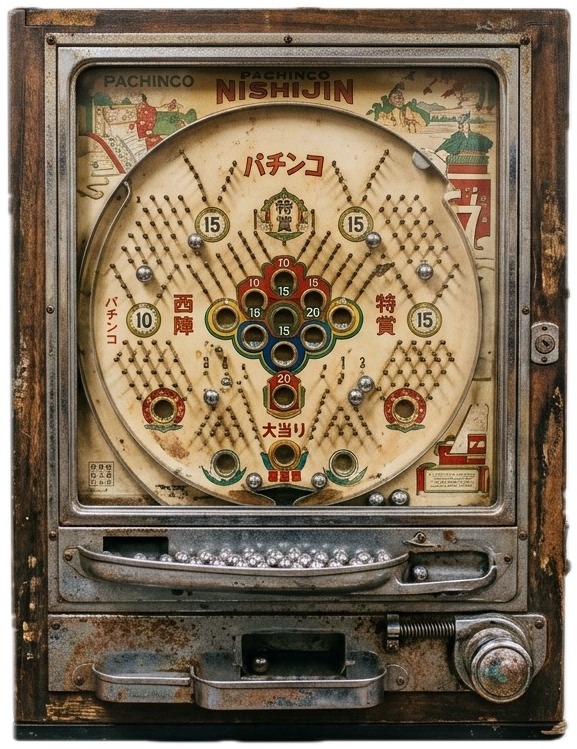
A pachinko machine is a vertical pinball device, played in large, loud parlors across Japan. Steel balls cascade down through a maze of pins; the player has minimal control over where they land.
Winning is largely a matter of chance: the machine is calibrated to produce a few winners and many losers.
The Zainichi Korean community came to dominate the pachinko industry not by preference but by exclusion. Barred from public employment and most formal private-sector work, they entered an industry Japanese society disdained and stayed when others left.
“Pachinko became an organising metaphor for my story. I wanted to explore the idea that life is like trying to win a game, which may have been designed to make the player lose.”
The novel’s own answer to that metaphor arrives not from the author but from a character who has watched the game long enough to understand it.
“Pachinko was a foolish game, but life was not.”