Zainichi
Japan’s three-decade dismantling of Korean sovereignty, and the eighty years of legal dispossession and identity erasure that followed for the Zainichi Korean community Pachinko’s characters belong to.
Annexation and Dispossession
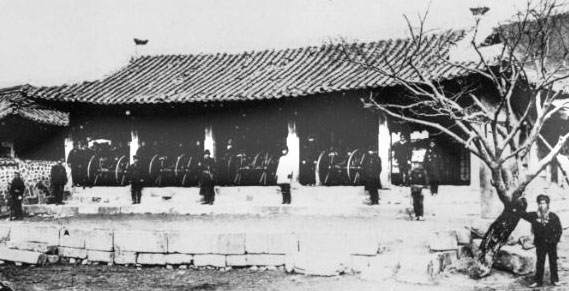
Korea did not fall quickly. Japan dismantled it methodically over three decades: forced treaties in 1876, protectorate status in 1905, formal annexation in 1910. At each stage, Korean sovereignty was stripped while the appearance of an independent state was maintained long enough for the next concession to be extracted.
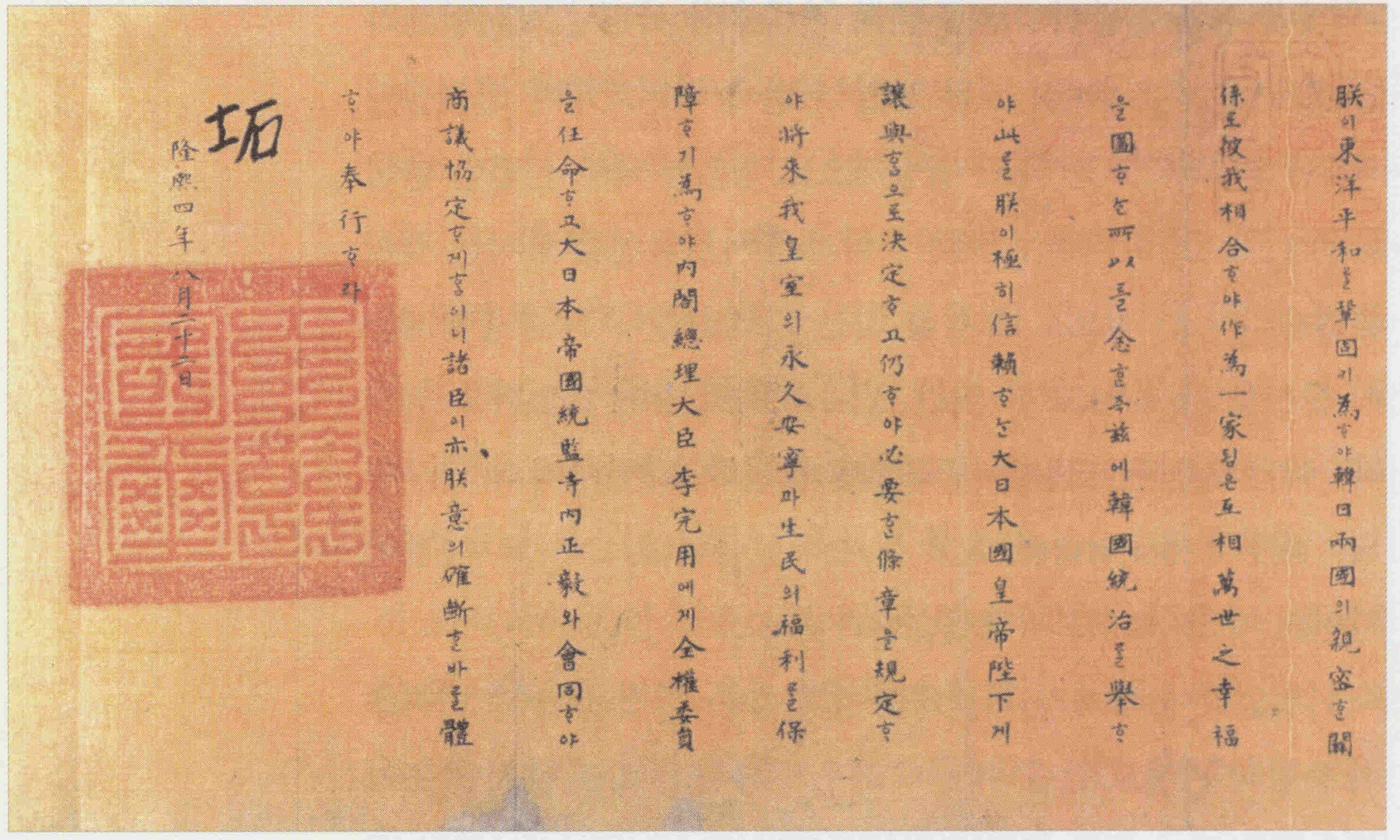
Formal annexation came on August 29, 1910. The treaty was signed not by Emperor Sunjong but by Prime Minister Yi Wan-yong, who served as Japan's collaborator and became the most reviled figure in modern Korean history. Japan's Resident-General had suppressed all Korean newspapers in the days before signing to prevent public knowledge of what was being negotiated. Korea was renamed Chōsen and governed by a Governor-General — always a Japanese military officer appointed directly by the Japanese Emperor.
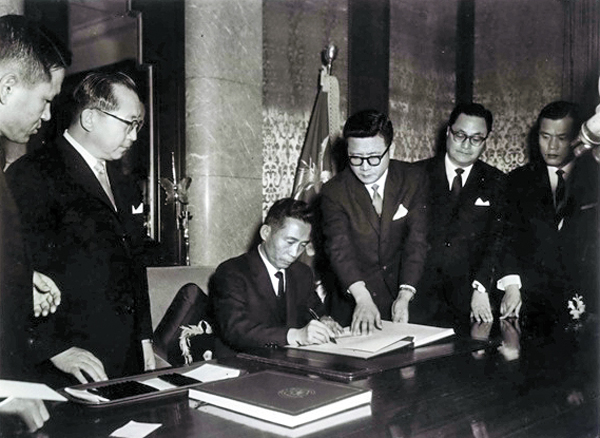
The annexation's legal validity has been disputed ever since. When Japan and South Korea normalized relations in 1965, the compromise language declared all pre-1910 treaties "already null and void" — deliberately ambiguous about whether they were invalid from the start or merely rescinded. That ambiguity remains a live political dispute: a disagreement, fundamentally, over whether Japan owes a full accounting of what it did.
Japanese Policy in Korea, 1876–1945
Treaty of Ganghwa. Japan forces Korea to open three ports to Japanese trade under an unequal treaty — Korea's first formal step toward colonial subjugation.
Korea becomes a Japanese protectorate. Following the Russo-Japanese War, Japan controls Korea's foreign policy, military, and civil administration. Formal sovereignty survives in name only.
Annexation. Korea is formally absorbed into the Japanese Empire and renamed Chōsen. Korean newspapers are suppressed; the country is placed under a military Governor-General.
The Land Survey. Japanese property registration displaces Korean farmers under customary tenure, transferring land to Japanese buyers. By the survey's end, approximately 70% of Korean agricultural workers are tenant farmers.
The March First Movement. Two million Koreans participate in demonstrations for independence. Japan responds with force — approximately 7,500 killed, 46,000 arrested. Japan shifts from military rule to "cultural rule."
Wartime assimilation policies. Kōminka — "imperialization" — intensifies: Korean language banned in schools (1937), the sōshi-kaimei policy requires Korean families to register Japanese-style names (1940), military conscription extended to Korea (1942).
Labor mobilization. Hundreds of thousands of Koreans are mobilized for wartime labor in Japan and Japanese-controlled territories — through recruitment, government coordination, and formal conscription. The Zainichi community's origins are built from this migration.
Surrender and liberation. Japan surrenders in August 1945. Colonial rule ends. Approximately two million Koreans are living in Japan. Most eventually repatriate; roughly 600,000 remain — and are immediately confronted with a new legal question: who are they now?
From Subjects to Stateless
Japan's treatment of the Zainichi community after 1945 is one of the most precisely documented cases of systematic legal dispossession in modern history. The mechanism was not a single dramatic act of exclusion but a series of administrative decisions — each one narrowing the community's legal standing until, in 1952, the process reached its logical conclusion.
people
The 1947 Alien Registration Ordinance made the doublethink official: it registered Koreans as foreigners while, on paper, they were still Japanese nationals. The state simply held whichever classification excluded them more.
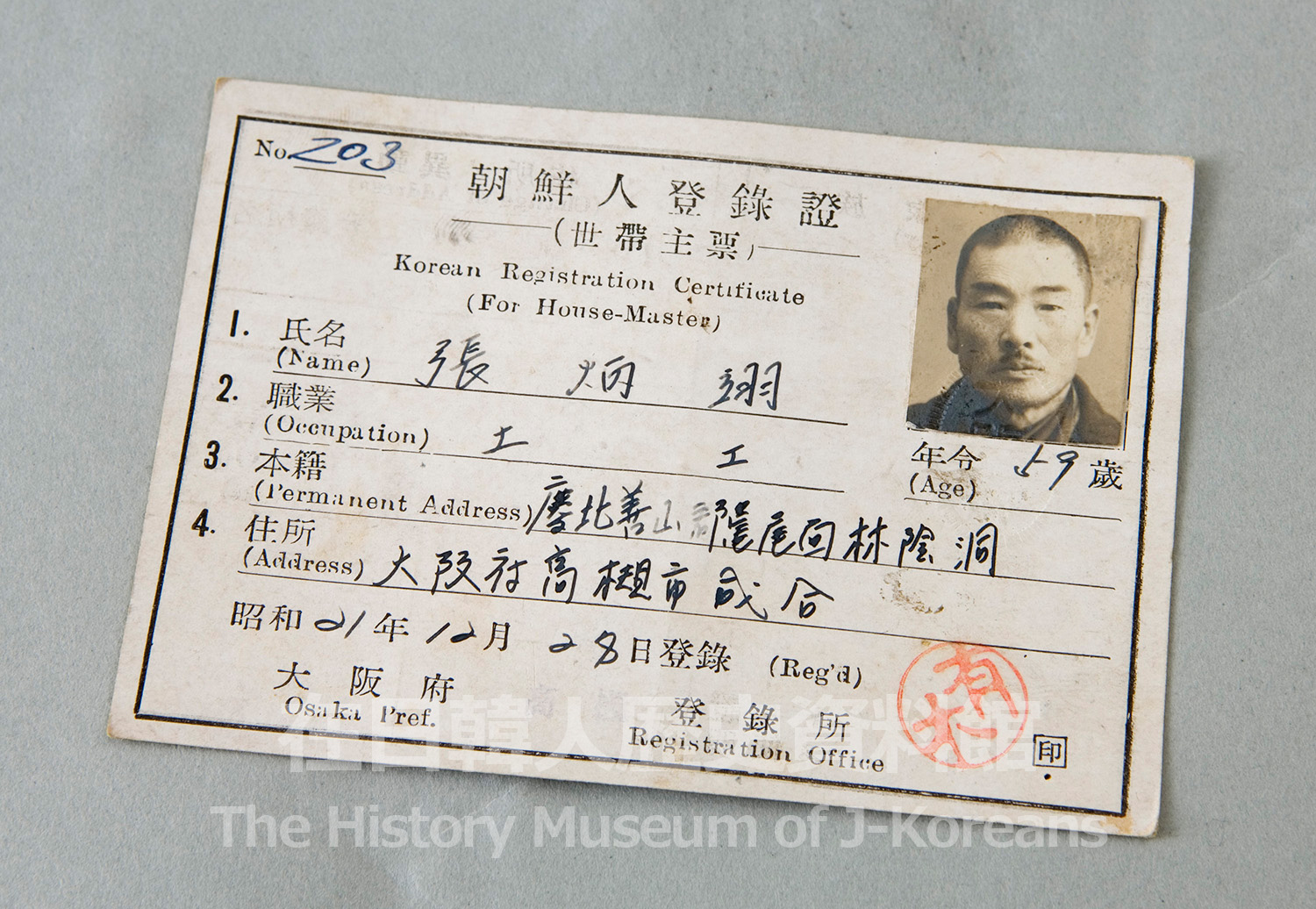
Exclusion was comprehensive and immediate. Pachinko was one of the few economic margins left open.
The Legal Arc, 1945–1992
The legal status of the Zainichi community did not stabilize after 1952 — it remained in flux for four more decades, improving incrementally through political campaigns the community organized and sustained over generations. Each milestone below is a reform that was fought for; none of them resolved the fundamental condition.
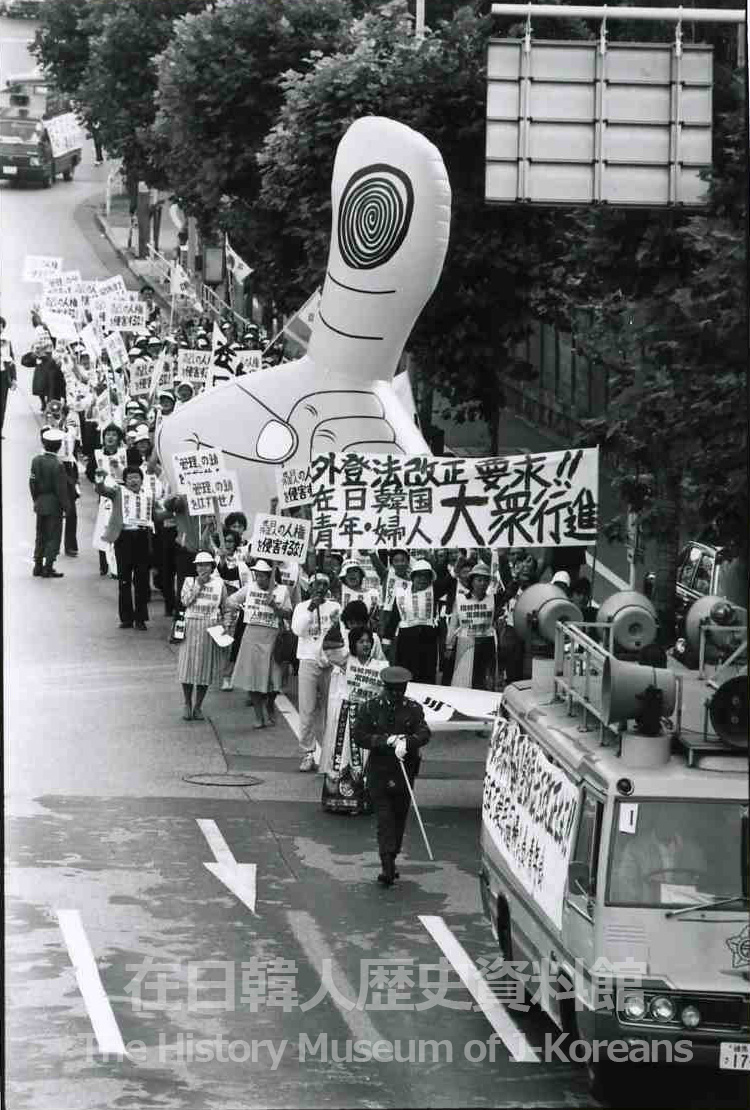
In 1955, fingerprinting was required of all registered foreigners. In 1965, the Japan–South Korea normalization treaty gave South Korea-affiliated Zainichi a "special permanent residency" — legal security, but not citizenship. Those affiliated with North Korea, or with neither state, remained in legal limbo.
In 1982, Japan ratified international human rights covenants that required extending permanent residency more broadly. For the first time, Zainichi Koreans with North Korean affiliation — or no affiliation — had a pathway to legal stability.
The 1985 citizenship law amendment allowed matrilineal transfer for the first time. In 1991, all Korean permanent residents were unified under a single legal category — eliminating a two-tier system that had divided the community since 1965.
The fingerprinting requirement — which had been used as an enforcement tool against the community since 1955 — was partially abolished in 1991–92 for South Korea-affiliated residents. Full abolition for all long-term foreign residents did not come until April 2000. And still, the ceiling above was never reached: Japan extends no citizenship to the Zainichi as a community. A path to individual naturalization exists and many have taken it — but as a birthright, belonging remains, to this day, a gap.
A Margin Inside a Margin
Two generations before Mozasu reached pachinko, his mother and grandmother were already living the same logic at the smallest scale — doing the work exclusion left open, and finding that even within it, being Korean narrowed the choice further. Sunja came to Osaka and sold kimchi from a cart. The cart was a margin the system permitted; what they were allowed to cook on it was narrowed again by the stigma of being Korean.
The smell followed Noa to school on his clothes — moved to the back of the class with the buta children, called "garlic turd."
But sugar was far harder to find than cabbage — a smaller margin still.
- 1Crush black sugar, under a cloth
- 2Melt over a coal stove
- 3Stir as it caramelizes
- 4Cool on the metal pan
- 5Cut into neat squares
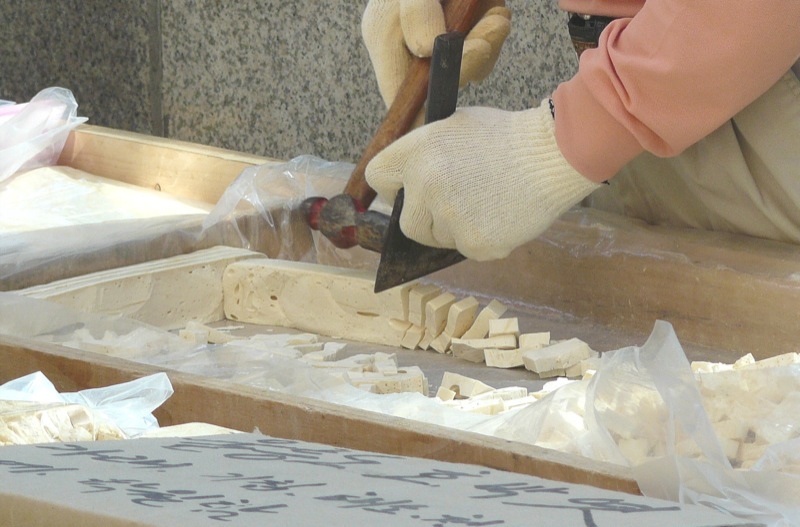
Yeot is the broad Korean term for traditional pulled taffy and hard candy. Lee calls the family's product "pumpkin taffy" — a homely, improvised version cooked not from the grain malt of classic yeot but from scarce, refined black sugar, whatever a connection could find that week. It is not a craft tradition lovingly kept; it is piecework run by women working from dark to light so a son could be sent to school — the candy where the family's long climb begins.
The Pachinko Industry
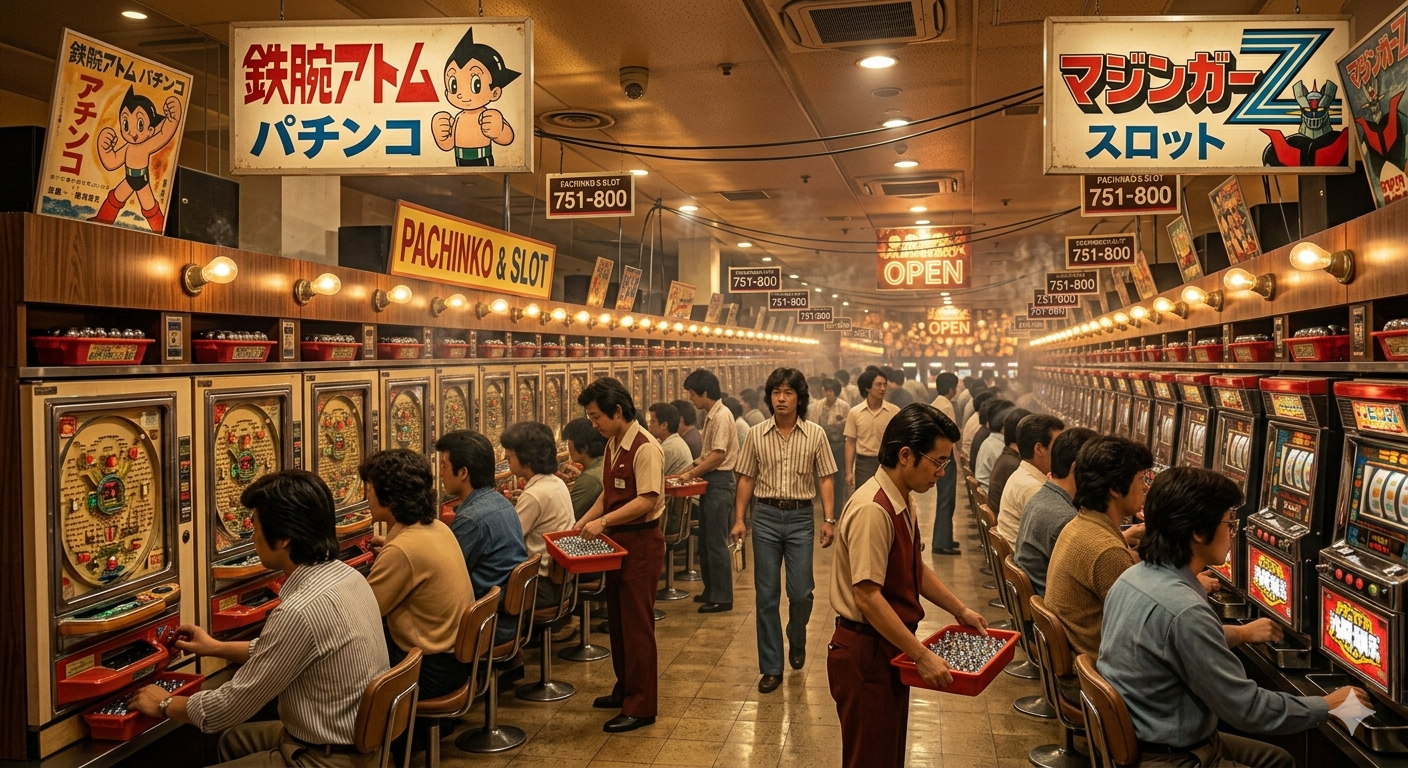
A boom-era parlor floor — the industry the community did not choose.
The pachinko industry's relationship to the Zainichi community is a direct consequence of the discrimination described above — and a precise illustration of how systematic exclusion shapes economic life. Zainichi Koreans did not choose pachinko. They entered it because the system left them few other options, and stayed because, when others left, they could not.
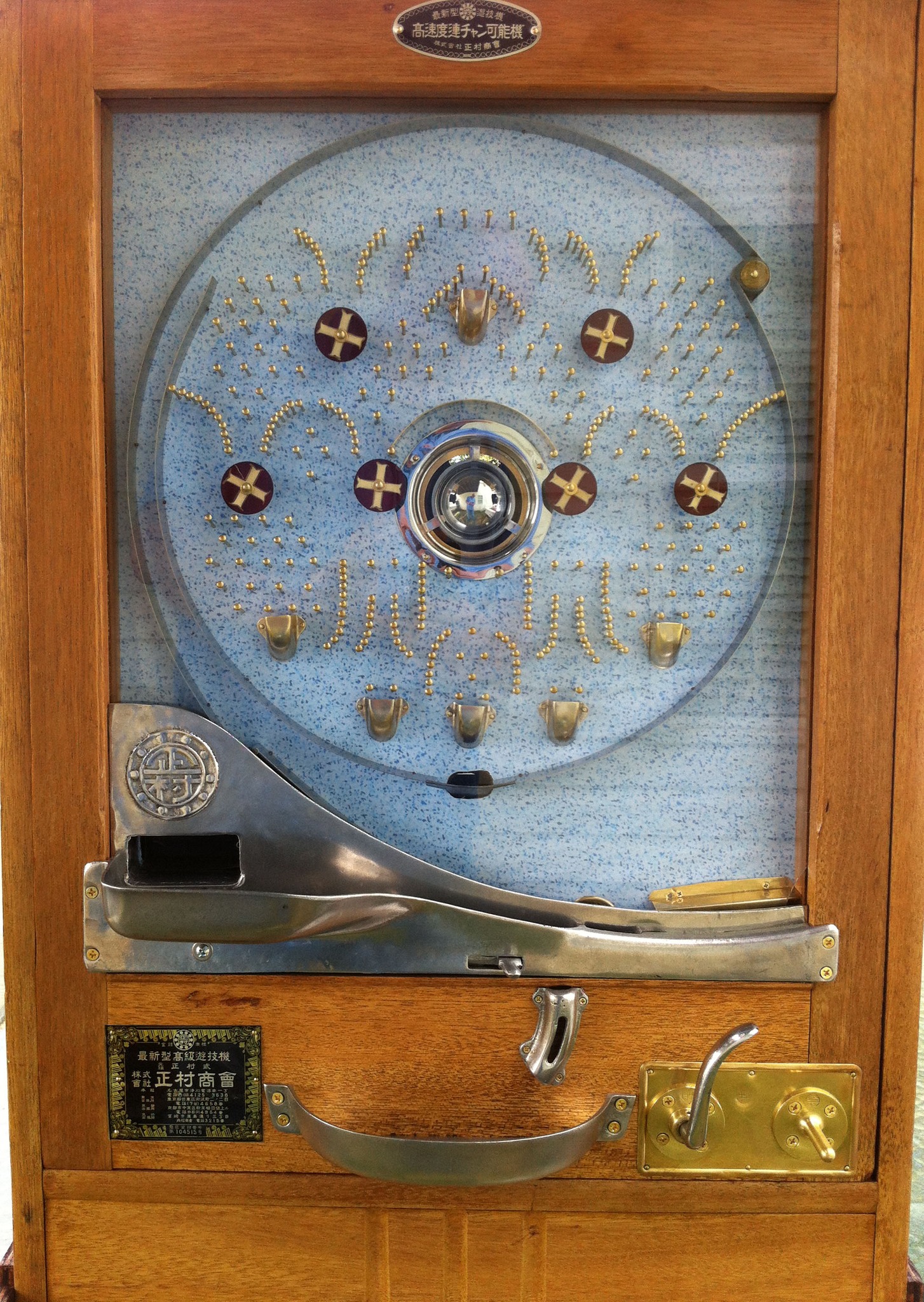
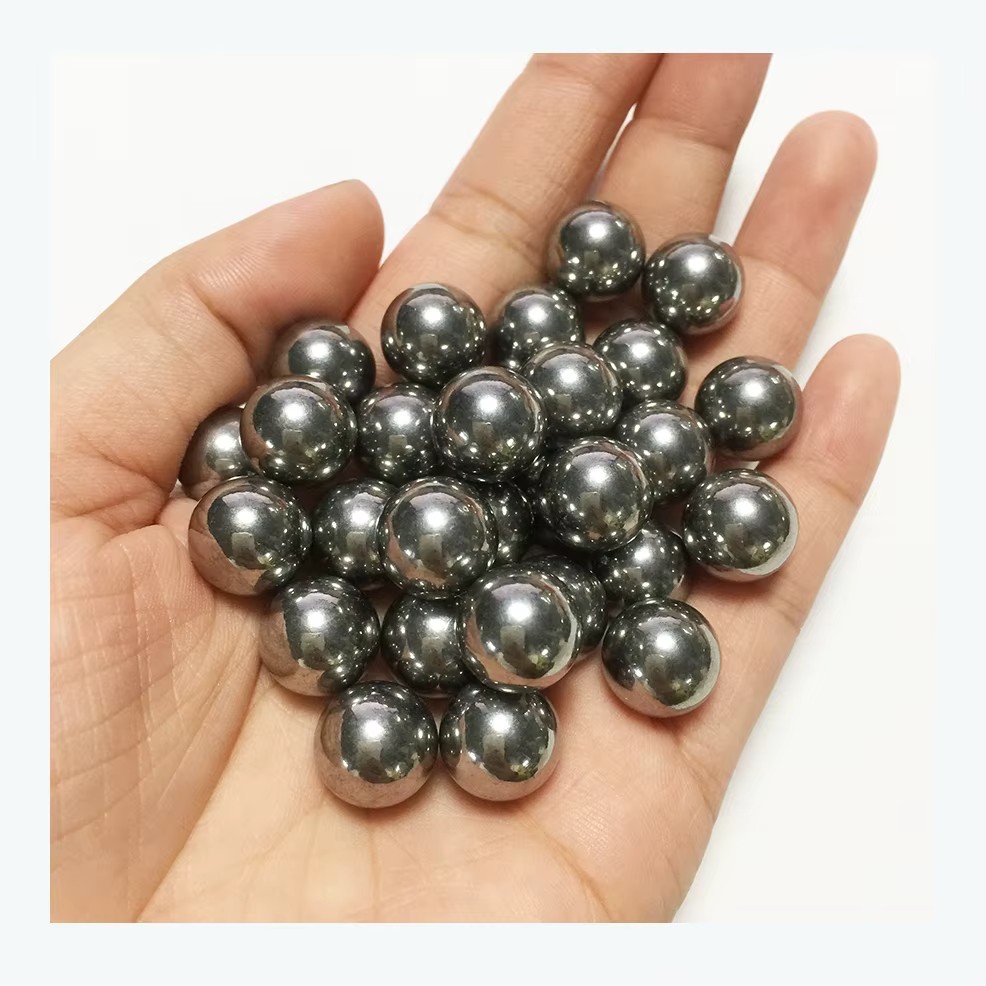
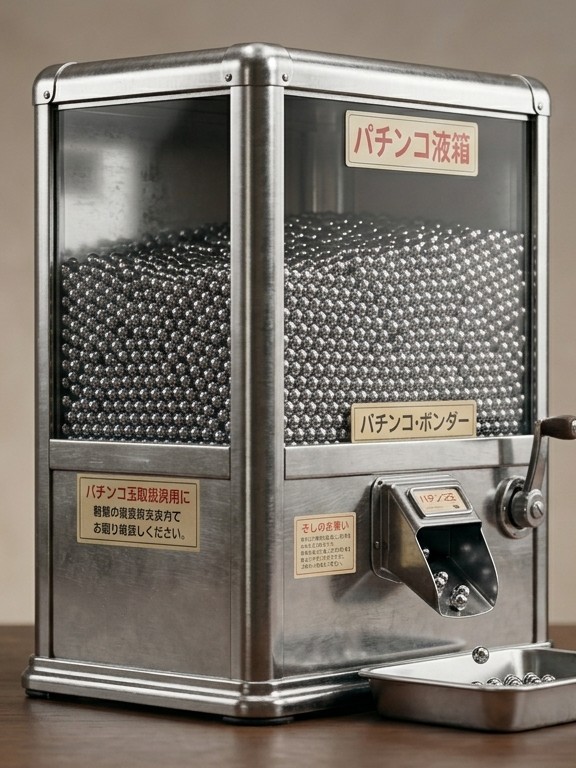
Equipment from the era of rapid Zainichi Korean ownership growth following the 1954 contraction. History Museum of J-Koreans (在日韓人歴史資料館), Tokyo.
Gambling is formally prohibited in Japan. Pachinko circumvents this through a prize-exchange mechanism: players win tokens or prizes that are then exchanged for cash at separate kiosks nearby. This quasi-legal structure made Japanese investors reluctant to commit to the industry. When a 1954 regulatory change caused a significant contraction — the number of parlors collapsed from 50,000 to 9,000 — Japanese owners could leave for other work. Zainichi Koreans, excluded from most formal employment, had no such exit. They stayed. As the industry recovered and expanded, Korean ownership grew dramatically.
By the 1990s, pachinko had become a 19 trillion yen annual industry — roughly twice the export revenues of Japan's entire car industry. Zainichi Koreans accounted for approximately 90% of sales.
≈ 2× the export revenue of Japan's entire car industry — and Zainichi Koreans accounted for roughly 90% of sales.

The industry Japanese society disdained, built into an economic foundation the community had not chosen.
The stigma attached to pachinko — its association with gambling, quasi-legality, and Korean identity — was produced by the same discrimination that made Korean participation necessary. In Pachinko, this dynamic runs through every generation: Mozasu's success in the industry is real and hard-won; what it cannot buy is the respect the dominant culture withholds on principle.
Atmospheric rendering · a boom-era parlor after hours
Chongryon and Mindan
After 1945, the Zainichi community faced a choice it had not made and could not avoid: Cold War geopolitics divided the Korean peninsula and forced the diaspora to take sides.
In 1945 the peninsula was split at the 38th parallel — a Soviet-backed North and a US-backed South. The diaspora in Japan was made to mirror that division. The dashed seam running through the diagram below is that same line, and each side carries its color.
- South → Mindan
- North → Chongryon
Korean Residents Union in Japan.
- Legal aid & representation
- Korean-language schooling
- 1965 — path to residency
North Korea's de facto mission in Japan.
- Korean-language schools
- Community loans
- Repatriation, 1959–84
1959–84 Chongryon organized a mass repatriation campaign that sent ≈90,000 people to North Korea — most of whom found conditions far worse than promised and were unable to leave.
The division was not of the community's making. The single gold mark holds the seam — the many who wanted only to keep living where they already lived.
The term Zainichi (在日) — literally "residing in Japan" — became the community's common self-designation across both political affiliations. Its neutrality was the point: it named a condition (living in Japan) rather than a political loyalty (South or North Korea) or a legal status (alien). In the novel, the word carries the weight of everything the community built in the space between those categories.
Hansu's dismissal of both organizations in the novel — his observation that neither group's leadership ever actually intends to return to Korea — reflects something Min Jin Lee found repeatedly in her research: the Zainichi community was often clear-eyed about the gap between organizational political rhetoric and the reality of people's lives. The organizations were necessary. They were also, for many in the community, beside the point.