Introduction
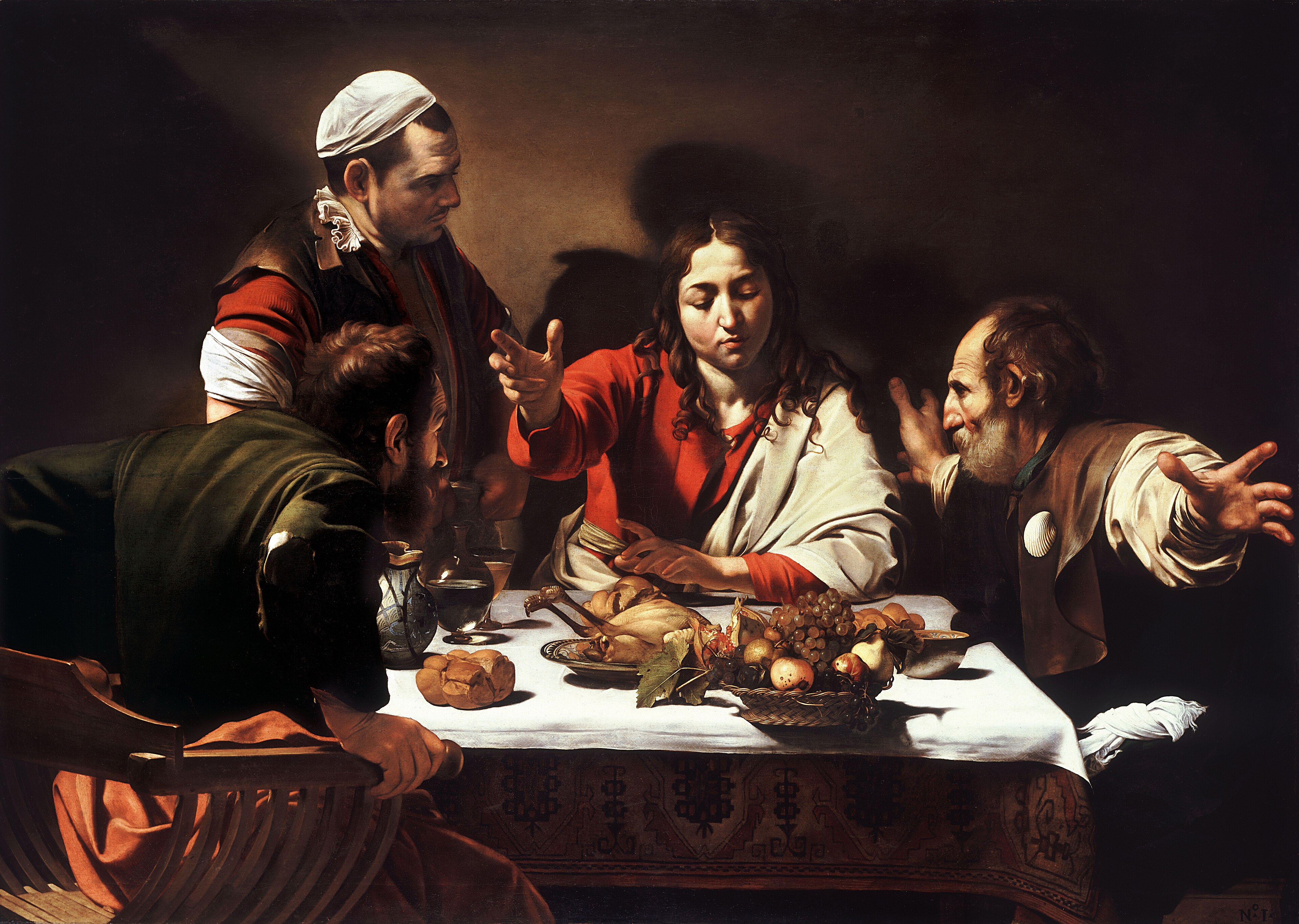
The Baroque shatters the calm, rational order of Renaissance painting. Seventeenth century painters filled their canvases with drama, emotion, and extremes of light and dark. They depict not a tranquil, rationally organized space but a stage for conflict — spiritual, psychological, and physical. The parallels with ’s epic of cosmic rebellion are immediate and profound.
and the Baroque painters share a common project: depicting a universe of overwhelming forces in which individual beings — fallen angels, saints, ordinary sinners — are caught up in dramas far larger than themselves. Both use scale, contrast, and sensory intensity to make the viewer feel the weight of that drama.
Figure & Space
How is the human figure placed within the pictorial space?
Baroque compositions are dynamic and often unstable. Figures twist, reach, fall, and surge diagonally across the canvas rather than standing in balanced symmetry. The space around them is often ambiguous: figures emerge from deep shadow, and the boundaries of the room or landscape may be invisible. In ’s work, figures float in a kind of luminous darkness; one senses space but cannot measure it. No longer calmly surveying the bright and legible landscape of the Renaissance image, the individual is now caught up in the dark grip of forces larger than they can comprehend.
Connection to Paradise Lost
’s spatial imagination is profoundly Baroque. Consider the scale of his settings: the “vast immeasurable abyss” of Chaos, the “darkness visible” of Hell, the vertiginous distances Satan traverses between worlds. These are not rationally measured Renaissance spaces but overwhelming, unmappable expanses in which even colossal figures like Satan seem dwarfed by the cosmos they inhabit. When describes Satan’s fall “nine times the space that measures day and night,” he is creating the literary equivalent of Baroque spatial drama. Like , places his figures in dynamic, unstable positions: Satan hurtling through Chaos, the rebel angels tumbling into the abyss, Eve reaching for the fruit in a garden that is about to be lost forever.
Light & Shadow
How does the painting use light — its source, quality, and emotional effect?
This is where the Baroque makes its most dramatic break with the previous era. Chiaroscuro — strong contrast between light and dark — becomes the defining feature. pioneered tenebrism, an extreme technique in which most of the canvas is plunged into darkness and a single, intense beam of light picks out the crucial action. Light is no longer evenly distributed or rationally explained; it is selective, dramatic, almost violent in its concealments and disclosures.
A single beam of light picks out the crucial action from enveloping darkness.
Connection to Paradise Lost
’s visual depiction of Hell — “No light, but rather darkness visible” — offers the literary equivalent of Baroque chiaroscuro. The phrase is itself a paradox worthy of : a darkness so thick it becomes something one can see, a light so diminished that it only makes the surrounding blackness more palpable. Throughout Paradise Lost, light and darkness are not merely settings but moral and theological forces. God is light; Satan’s rebellion is a flight into shadow. Yet , like the best Baroque painters, refuses to make this simple. Satan in Hell retains a “faded splendor.” The former Lucifer is a figure of ruined light, and his diminished radiance emerging from the surrounding darkness is pure Baroque drama.
Brushwork & Surface
What is the physical character of the paint itself?
Here the period divides. Vermeer and achieve an almost miraculous smoothness and luminosity, while builds up thick, rough impasto — paint applied so heavily that it catches real light and casts real shadows on the canvas surface. In ’s late works, paint itself becomes a physical presence: ridges, slabs, even fingerprints. This makes the painting simultaneously an illusion and an object, inviting attention to both the depicted subject and the raw material of its making. The tension between seeing through the surface and seeing the surface itself is one of the Baroque’s great innovations.
Connection to Paradise Lost
’s verse operates in this same double register. His language is extraordinarily dense, layered, and challenging: the reversible syntax, the massive periodic sentences, and the outrageously frequent use of enjambment all push the act of reading to the limit of understanding. In response to critics outraged by his refusal to honor the tradition of the “epic” rhyming couplet, claimed that he had freed his poem from “vexation, hindrance, and constraint” of “barbarous” rhyme. He conceived of his stanzas as somehow independently alive and vital, “resourced with [their] own quickening power” (as Lucifer asserts of the angels in the flashback scene before their rebellion). In Paradise Lost, language itself is experienced as a physical medium, even as it carries the reader through the narrative. This is the literary equivalent of ’s impasto: a surface that insists on its own materiality while simultaneously depicting a world.
Looking Back
Place ’s Supper at Emmaus next to ’s School of Athens and the contrast is obvious: where ’s space is open, balanced, and rationally lit, ’s is dark, confined, and slashed by a single dramatic beam. ’s figures stand in calm philosophical conversation, while ’s are caught in a moment of sudden, life-changing encounter. The Renaissance confidence that the world can be rationally comprehended has given way to a conviction that the world is a theater of overwhelming forces, precisely the shift from Hamlet’s questioning to ’s cosmic drama.
Looking Forward
After the Baroque’s cosmic intensity, the Enlightenment will shrink the scale dramatically. The vast, dark, overwhelming spaces of and will give way to bright, intimate, socially oriented interiors. The theological drama of light against darkness will contract into the gentle, flattering illumination of drawing rooms and gardens. The heroic individual caught in the grip of cosmic forces will become the social individual navigating the pleasures and constraints of polite society.
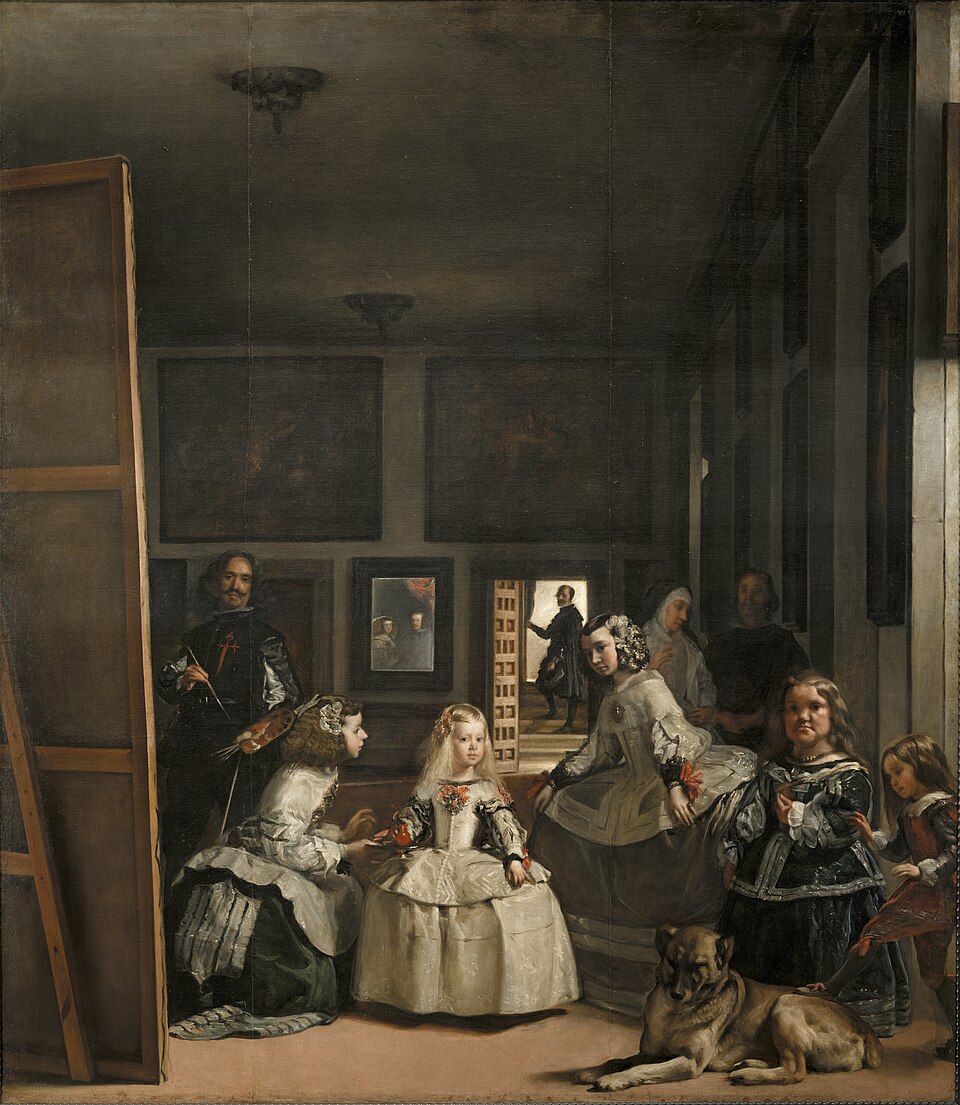
Velázquez builds a real but unmeasurable room and then makes your own position the puzzle. He stands at a huge canvas looking out at us, and a mirror on the back wall reflects the king and queen — who occupy the very spot where we are standing. Figures turn and glance in different directions across a space that dissolves upward into shadow, so the composition never resolves into a single, stable vantage.
Ask who is being painted, and where you are standing. The picture refuses to answer.
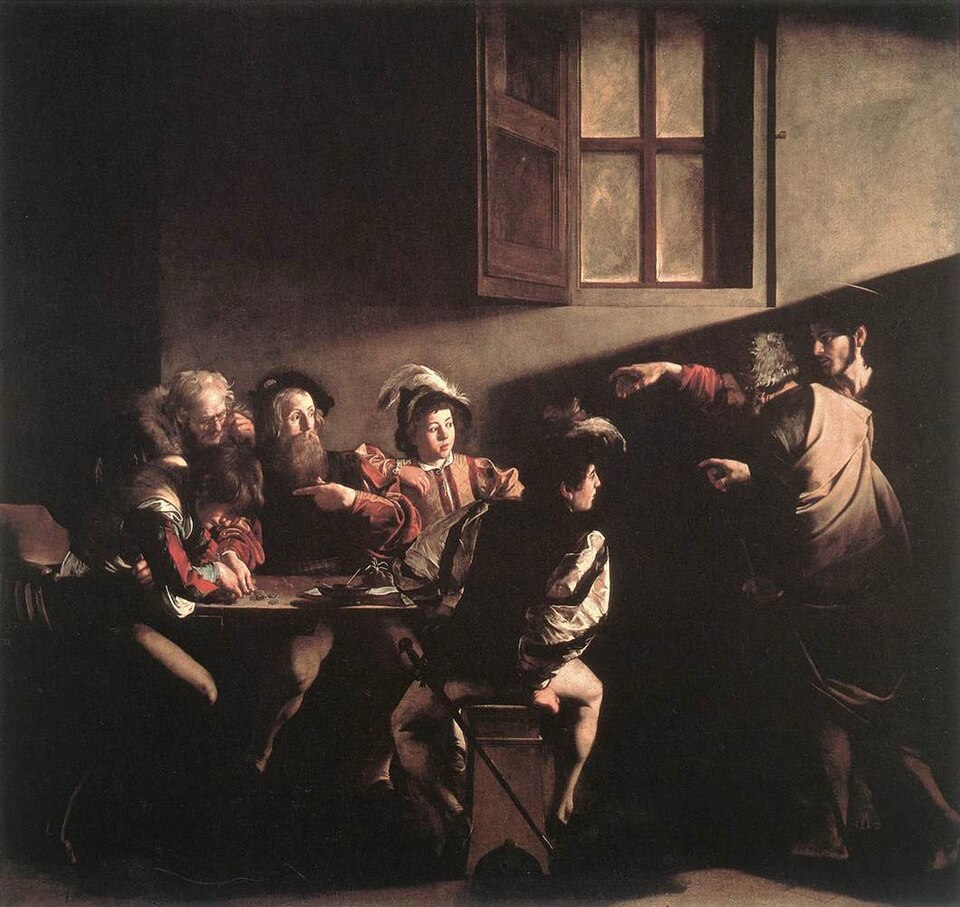
A single shaft of light enters from the upper right and cuts across a dark, ordinary room to fall on Matthew at his counting table. The beam echoes the line of Christ's pointing hand, so that light and gesture together perform the summons. Everything outside that diagonal — most of the canvas — stays in shadow, and the sacred enters the mundane world with no softening glow.
Trace the beam back to its edge. Caravaggio tells you exactly what to see and buries the rest.
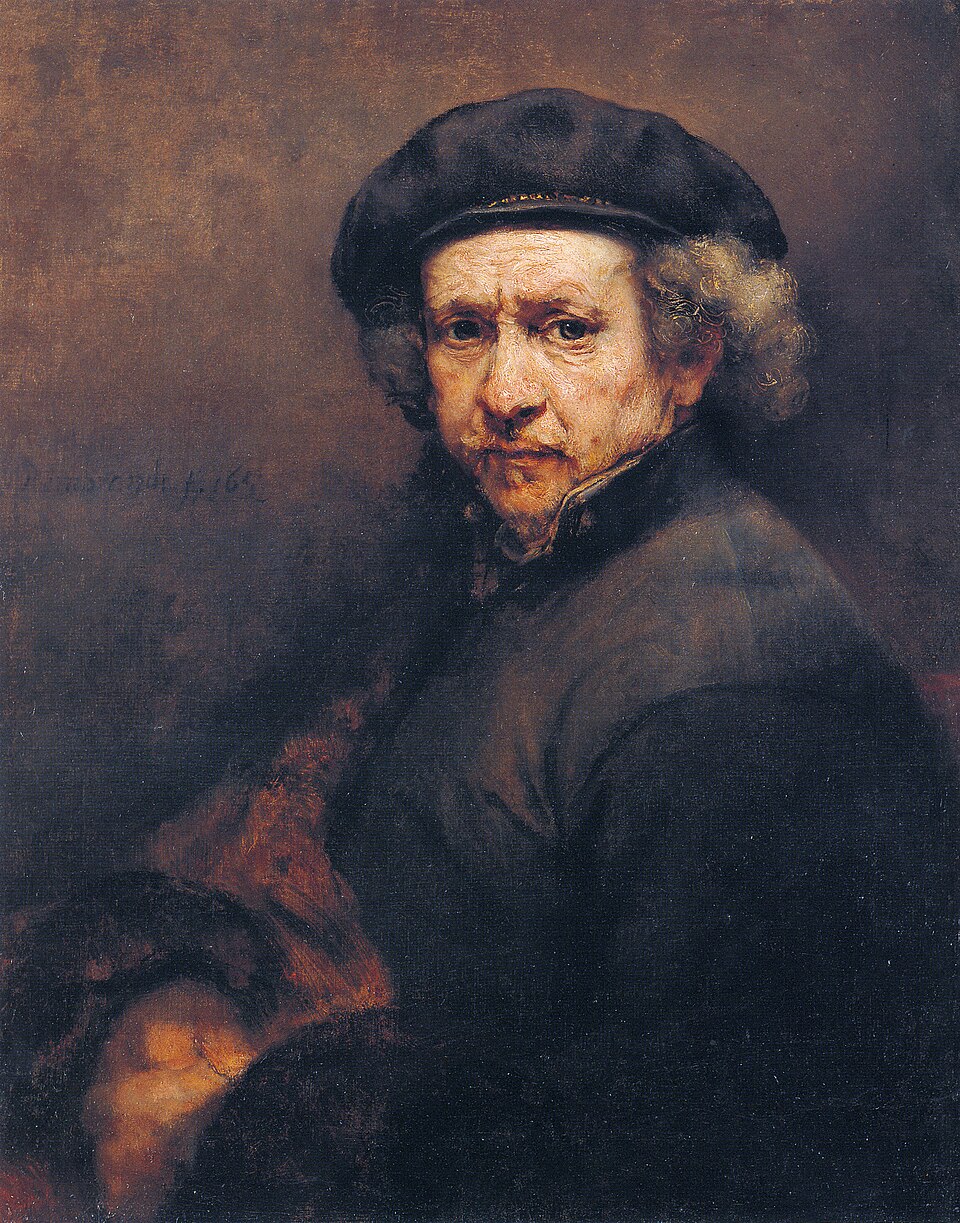
Look closely at the highlighted flesh — the forehead, the nose, the collar — where the paint is thick and sculptural, built up in ridges that catch actual light on the canvas surface. The shadows, by contrast, are painted thinly and transparently. The aging face is constructed from visible material, so you see both a man and the physical stuff of his making at once.
Move your eye from the lit ridges to the thin shadows. The paint stops hiding and becomes the subject.